I’d seen this, I don’t know, fifteen or sixteen years ago. All that remained in my memory was the central nightmarish mystery: a young woman meets an older woman on a train, but when she awakes, not only is the other woman gone, no one remembers her having been there (or so they claim).
Mysteries last, someone once said, while explanations fade. It’s true, I think.
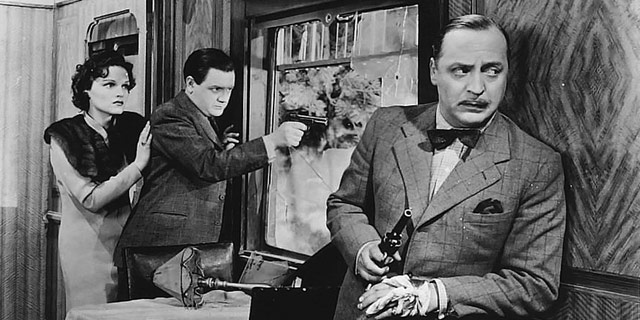
The movie is 80 years old; it precedes World War II, if barely. It’s funny and romantic – I hadn’t remembered that (two comic side characters, Charters and Caldicott, ended up in various spin-offs – I’d never known that).
Iris, the main character, leaps into action a little too quickly for my taste. I think something’s lost, too, by her never really doubting her own experience; it might have been interesting to see her briefly wonder if the doctor was correct, for instance.
The plot is, truth be told, rickety. Nothing in the film is technically impossible, but several things are unlikely.
That’s eighty years of hindsight speaking. It’s a successful film; its combination of humor, romance and suspense works very well. For me, its most potent potion is the nightmarish, paranoid scenario at its heart. The mystery. I already feel myself forgetting the solution.
The Lady Vanishes is both a favorite of mine and a disappointment. Don’t get me wrong, I love the film. The character interactions, flat villains, and questionable motivations, however, all combine to age this film more than it deserves.
It starts out surprisingly with a very strong female lead. She is confident, and in charge. This is quite different from most of the films I’ve seen from the era where the women are background characters with no real impact on the plot. Besides the strangeness of them all standing on tables and things in the inn during one scene, the characters seem real. It is the men in the beginning that seem like stereotypes.
This all changes, however, when Iris (the lead female character) gets hit on the head while boarding the train. Her confidence is gone, and she is doomed to suffer from constant fainting and character flatness for the rest of the film. It is the men at this point that become in charge of the plot and the mysteries for the most part. Gilbert, who started off the film acting like he would fit right in with names like Weinstein, ended up portraying the main protagonist. His character, however, still remains flat and unchanging. The villains in this film are all comically sinister. Perhaps in the day, people would have been terrified by them, but each time one of them smiled I could only laugh at the absurdity of it.
Iris’s demanding to know where Mrs. Froy went is inexplicably sudden and deep-rooted. There is very little progression into her hysteria: it is sudden and nearly inconsolable at times. The journey throughout the train, however is a fun one. The film is light-hearted to an extent, but with a dark background which makes me wonder how much the director and writers knew about what was to come only a few years later in World War II.
I go back and forth on the ending. I know in the book, Mrs. Froy was only a mere lady, but the film turns her into something more in the end. I liked this twist, but I know purists would probably disagree. It would be interesting to compare this film to its later incarnations (the 1979 version, and the 2013 BBC version). I watched the BBC version upon its airing, but don’t remember much about it unfortunately.
In the end, this is a fun film that I feel was a bit ahead of its time, but still behind ours. This shouldn’t be a surprise. If you take this film for what it is, it is a fun ride that I feel that any film buff should watch.
5 responses to “The Lady Vanishes”
I’d seen this, I don’t know, fifteen or sixteen years ago. All that remained in my memory was the central nightmarish mystery: a young woman meets an older woman on a train, but when she awakes, not only is the other woman gone, no one remembers her having been there (or so they claim).
Mysteries last, someone once said, while explanations fade. It’s true, I think.
The movie is 80 years old; it precedes World War II, if barely. It’s funny and romantic – I hadn’t remembered that (two comic side characters, Charters and Caldicott, ended up in various spin-offs – I’d never known that).
Iris, the main character, leaps into action a little too quickly for my taste. I think something’s lost, too, by her never really doubting her own experience; it might have been interesting to see her briefly wonder if the doctor was correct, for instance.
The plot is, truth be told, rickety. Nothing in the film is technically impossible, but several things are unlikely.
That’s eighty years of hindsight speaking. It’s a successful film; its combination of humor, romance and suspense works very well. For me, its most potent potion is the nightmarish, paranoid scenario at its heart. The mystery. I already feel myself forgetting the solution.
I completely agree with this.
I give it 3 out of 4 cricket obsessives.
That fourth cricket obsessive is just such a jerk…
The Lady Vanishes is both a favorite of mine and a disappointment. Don’t get me wrong, I love the film. The character interactions, flat villains, and questionable motivations, however, all combine to age this film more than it deserves.
It starts out surprisingly with a very strong female lead. She is confident, and in charge. This is quite different from most of the films I’ve seen from the era where the women are background characters with no real impact on the plot. Besides the strangeness of them all standing on tables and things in the inn during one scene, the characters seem real. It is the men in the beginning that seem like stereotypes.
This all changes, however, when Iris (the lead female character) gets hit on the head while boarding the train. Her confidence is gone, and she is doomed to suffer from constant fainting and character flatness for the rest of the film. It is the men at this point that become in charge of the plot and the mysteries for the most part. Gilbert, who started off the film acting like he would fit right in with names like Weinstein, ended up portraying the main protagonist. His character, however, still remains flat and unchanging. The villains in this film are all comically sinister. Perhaps in the day, people would have been terrified by them, but each time one of them smiled I could only laugh at the absurdity of it.
Iris’s demanding to know where Mrs. Froy went is inexplicably sudden and deep-rooted. There is very little progression into her hysteria: it is sudden and nearly inconsolable at times. The journey throughout the train, however is a fun one. The film is light-hearted to an extent, but with a dark background which makes me wonder how much the director and writers knew about what was to come only a few years later in World War II.
I go back and forth on the ending. I know in the book, Mrs. Froy was only a mere lady, but the film turns her into something more in the end. I liked this twist, but I know purists would probably disagree. It would be interesting to compare this film to its later incarnations (the 1979 version, and the 2013 BBC version). I watched the BBC version upon its airing, but don’t remember much about it unfortunately.
In the end, this is a fun film that I feel was a bit ahead of its time, but still behind ours. This shouldn’t be a surprise. If you take this film for what it is, it is a fun ride that I feel that any film buff should watch.